


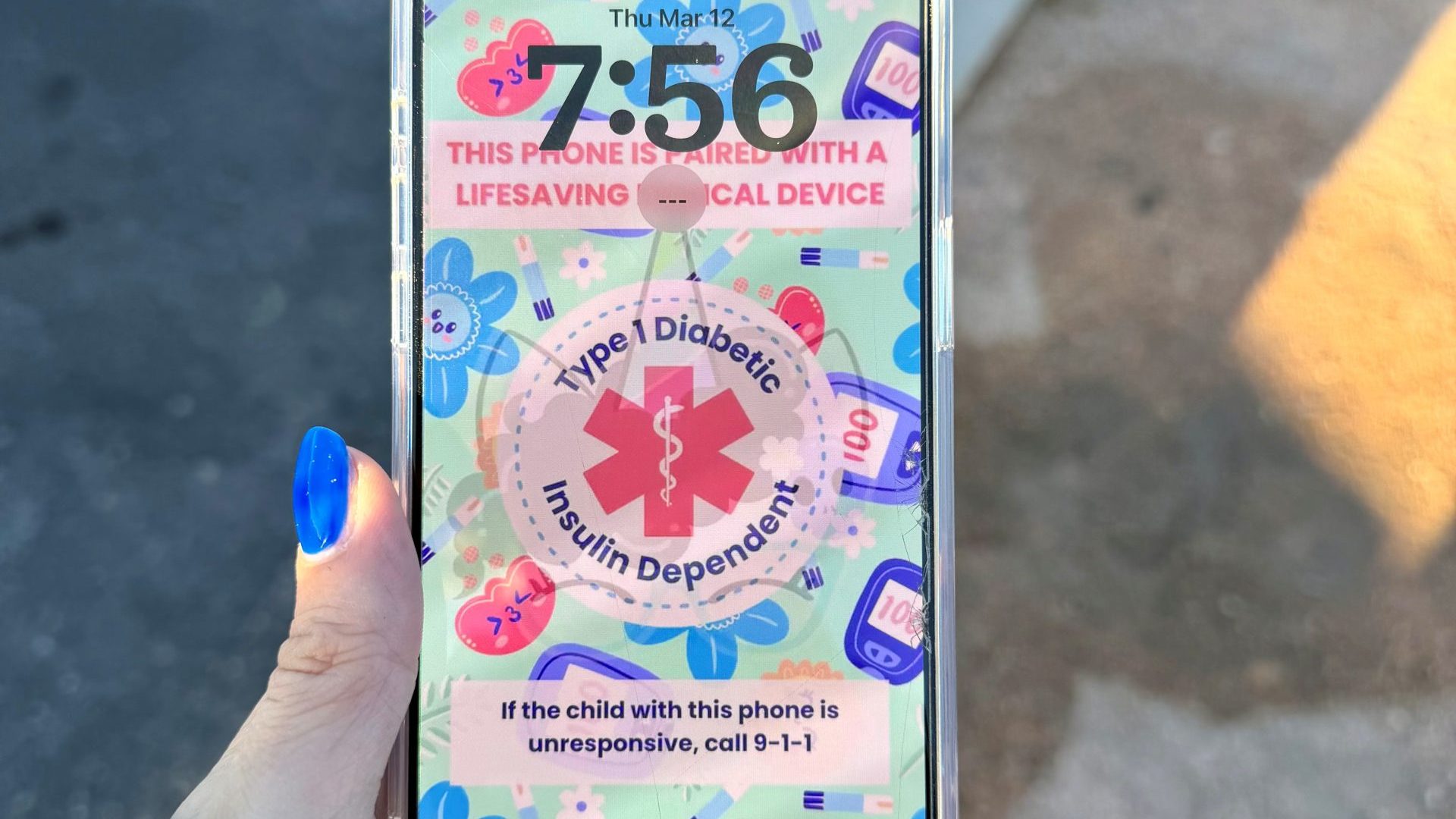
It might seem a little extreme to some that my 5-year-old has a cellphone, especially when she’s only in Pre-K. I get it. When people picture a child that young with a phone, they imagine games, videos, or something to keep them entertained. But for Kay, it’s not really a cellphone at all. It’s a medical device that helps keep her alive.
That small device is what allows us to monitor her blood sugar and deliver insulin through her Type 1 Diabetes technology. Without it, her continuous glucose monitor and insulin pump can’t fully communicate the way they’re supposed to. To some people it may just look like a phone, but for us it’s a critical piece of how we manage her diabetes every single day. It’s literally life for her. The other morning was a reminder of just how important that little device is.
After dropping Kay off at school, I realized I had accidentally left her phone at home. The moment it hit me, my stomach dropped. I immediately let her teacher know what happened and told her Kay could go ahead and eat breakfast without insulin first. It wasn’t Kay’s fault I forgot it, and the last thing I wanted was for her breakfast time to be shortened when I knew she was hungry. So I rushed back home, grabbed the phone, and drove it right back to school.
When I got there, I stood and waited while her glucose monitor and insulin pump reconnected to the phone. The signal had been lost once they were too far apart, so everything needed a moment to sync back up again. Once it did, I was finally able to give Kay the insulin she needed for the breakfast she had already started eating.
It was one of those small moments that probably doesn’t seem like a big deal from the outside, but in our world it is. Living with Type 1 Diabetes means constantly thinking ahead, constantly adjusting, and sometimes running back and forth because something small suddenly becomes very important.
Before leaving the school again, I clipped the pouch that holds Kay’s phone over her shoulders. That way, once the nurse finished checking her phone to confirm the insulin had been given, it could go right back into the pouch and stay on Kay’s body while she learns and plays. Keeping it with her ensures we always have access to her blood sugar readings and that her devices stay connected throughout the day.
To some people, it may still seem like a lot for a little kid. But this is life with Type 1 Diabetes.
And that “cellphone” people see a preschooler carrying around isn’t a toy or a distraction. It’s part of the system that helps keep my daughter safe while she’s away from me. It’s how we stay connected to what her body is doing when she’s at school, playing with friends, learning new things, and just being a kid.
Sometimes the things that look unusual from the outside have a very important reason behind them. And sometimes a cellphone isn’t really a cellphone at all. It’s a lifeline.