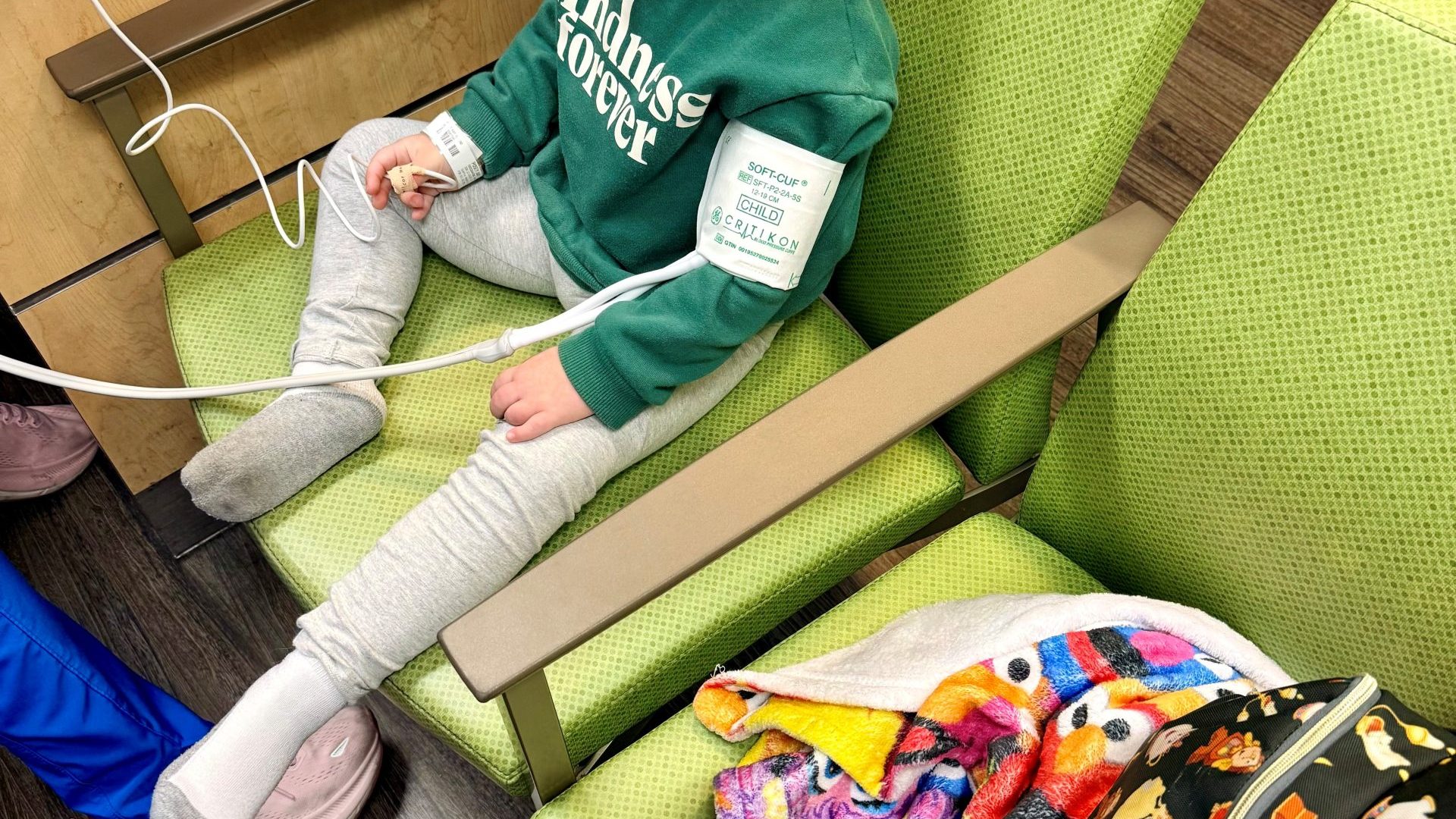


If there’s one thing I’ve learned on this journey with Kay, it’s that nothing is ever as simple as it looks on the surface. Last week, we had an unexpected and exhausting ER visit that taught me so much about how differently kids with Down syndrome can present symptoms—and how easy it is to miss something even when you’re doing everything “right.”
Constipation is extremely common in individuals with Down syndrome because of low muscle tone, or hypotonia. That low tone doesn’t just affect movement and coordination; it also affects the muscles of the digestive tract. Everything moves more slowly, which means stool can build up even without the usual signs we expect. And constipation can be incredibly painful, yet many kids with Down syndrome don’t always express discomfort in obvious ways. Some compensate, some push through it, and some don’t verbalize where or how they feel until things are severe.
I normally stay on top of Kay’s digestive health with probiotics, high-fiber foods, and making sure she’s drinking enough water. But this time was confusing. Her stool had actually become softer than usual, which made me think something else was going on—a stomach bug, irritation, anything but constipation. I even paused her probiotics for a bit because I didn’t want to make things worse. I truly didn’t realize that softer stool can still be a sign of constipation, especially in kids with low tone. Sometimes the only stool able to pass is the soft part squeezing around the harder stool that’s stuck.
Since Kay has Down syndrome, she’s already more susceptible to autoimmune conditions like celiac disease. And when someone has one autoimmune condition, it’s more common for another to show up. With her stomach issues lingering, I requested the full round of bloodwork to check for celiac, thyroid function, and anything else that could be contributing. We also visited a gastroenterologist to review everything, and thankfully, her labs showed no signs of celiac or other concerns.
Ironically, her stomach issues really started after that GI visit. She began needing the restroom often, saying “poop” but not always going, yet still acting completely like herself—laughing, playing, living her normal little life. That made everything more confusing. I brought her to her pediatrician and explained everything that had happened so far. He told me I was already doing all the things he would suggest and didn’t have additional answers except possibly trying a stool sample. So we went home, still without clarity.
Almost two weeks passed, and nothing improved. Then Sunday night everything changed. Around 7 p.m., Kay told me “tummy hurt” and pointed to the lower right side of her stomach. She was consistent every time I asked, but still not in severe pain—just uncomfortable. She fell asleep around 8:30 p.m., and I hoped whatever it was would pass. Instead, at 10:30 p.m., she woke up screaming and crying, a scream that told me immediately how much pain she was in. I called our local children’s hospital and the nurse advised me to bring her in right away.
We got dressed, grabbed our hospital bag, and drove to the ER. From 11:30 p.m. to 3:30 a.m., they ran tests: a urine sample, which came back clear, and a stomach X-ray, which did not. The X-ray showed moderate blockage from stool. The doctor explained that constipation can absolutely look like this—soft stool passing around the harder stool that’s stuck. Even he admitted her abdomen felt normal to him, and without the X-ray he wouldn’t have suspected constipation either.
I agreed to have them treat her there in the ER so she could at least get some relief before going home. Thankfully she was able to pass some stool, and we were discharged early that morning. Monday became a rest day. Kay still had discomfort but nothing like the night before. I ran to the store and grabbed anything that might help keep things moving gently—foods, supplements, anything safe for her age that might offer relief. She made a bit more progress, but I kept her home Tuesday just to be safe.
I also called her pediatrician’s office to let them know what the ER found. Not to complain, but because I genuinely think it could help them with future patients who present the same way. I was admittedly disappointed that there hadn’t been more suggestions earlier, especially now knowing it could have been caught. But I also know that kids with Down syndrome can be incredibly tough and can mask symptoms without even realizing they’re doing it.
Kay seems to be feeling so much better now, and that brings me so much relief. She already goes through more than most kids her age, and seeing her in pain was heartbreaking. I’m grateful we trusted our instincts and went in when we did. If there’s one big takeaway from this experience, it’s that soft stool does not always mean things are moving normally—and that a child who seems “fine” can still be very backed up internally.
I hope sharing this helps another parent avoid the confusion we went through or at least feel less alone when symptoms don’t make sense. Kay is tougher than she’ll ever know, and I’m lucky every day to be her mom.