


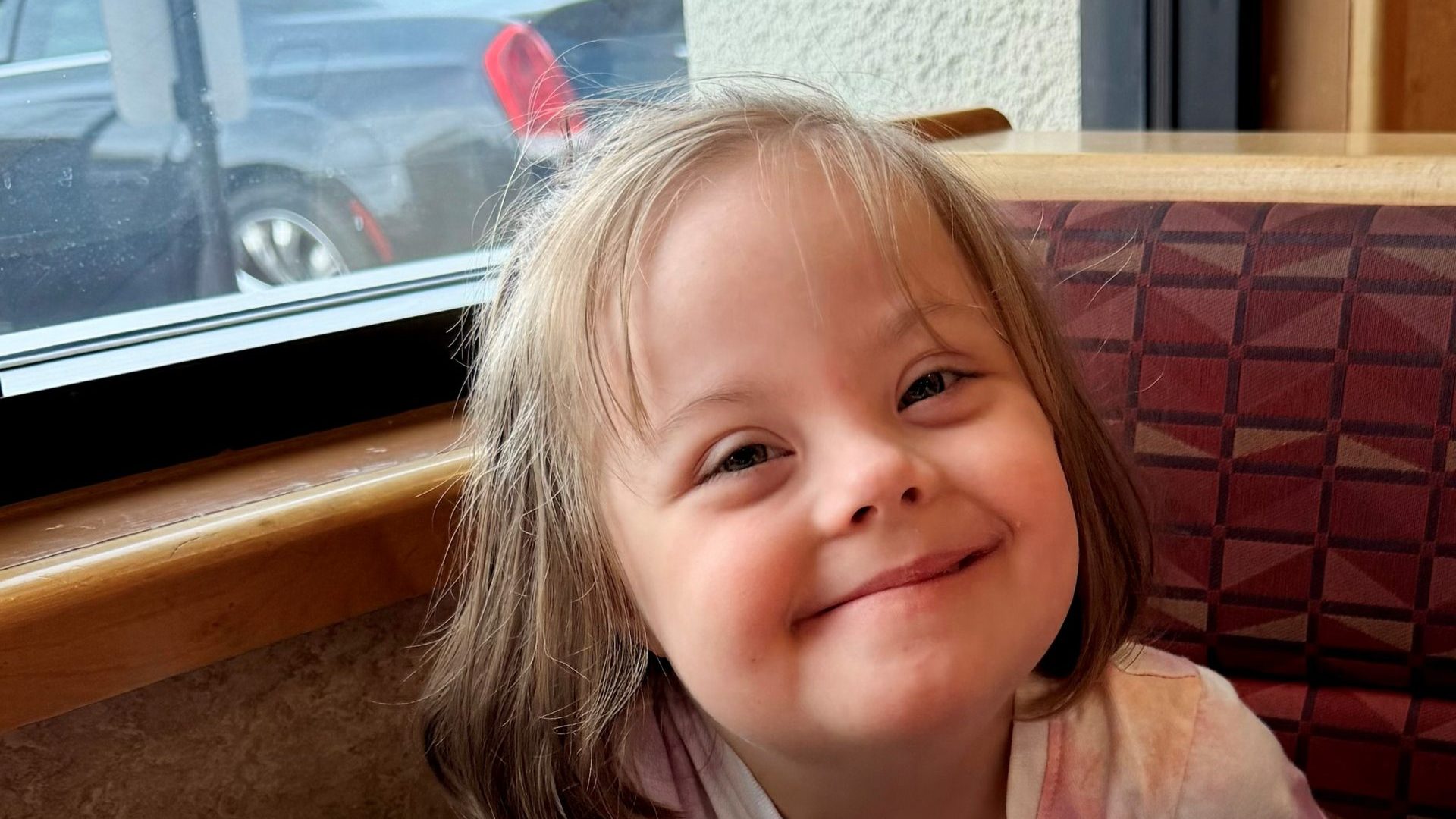
Recently, Kay had to get blood work done, which is something we do on a yearly basis due to her having Down syndrome. Kids with Down syndrome can be more susceptible to certain health conditions, so routine lab work is really important. It helps us stay proactive—keeping an eye on things like thyroid function, vitamin levels, and overall health so we can catch anything early and address it right away.
Even though it’s routine… it’s never easy.
Blood draws are hard, especially because Kay doesn’t fully understand why they have to happen. All she knows is that it’s uncomfortable, unfamiliar, and not something she wants any part of.
And honestly? I don’t blame her.
It always takes a team. Usually three of us.
I have to hold her—fully restrain her, which is without a doubt the hardest part for me. There’s nothing natural about holding your child down while they’re scared and fighting you with everything they have. And somehow, despite low muscle tone being part of Down syndrome… she finds strength I didn’t know existed in those moments. (Low muscle tone where?? HAH)
Another person helps hold her arm steady, and then someone else performs the blood draw. It’s fairly quick, but it never feels quick when you’re in it.
We got through it, though.
But of course, it couldn’t be quite that simple.
I came in with lab orders from her primary care doctor and separate orders from her endocrinologist. For safety reasons, they were only able to complete one set of blood work in a single visit. As much as I would have loved to get everything done at once, I completely understand—there’s only so much you can (and should) put her through in one sitting.
So today, we tackled her yearly labs.
And the rest… we’ll go back for. Eventually.
Another layer to all of this is that Kay’s low muscle tone can show up in ways people don’t always think about—like making it harder to find her veins. That alone can make blood draws more challenging.
They asked how much water she’d had to drink, and I had to internally laugh a little because Kay loves her water. So I knew hydration wasn’t the issue. Sometimes it’s just one of those things—another small piece of the puzzle that comes with her diagnosis.
Days like that are tough. There’s no sugarcoating it.
But they’re also part of staying on top of her health, advocating for her, and making sure we’re doing everything we can to support her long-term.
We got through it—tears, strength, and all.